7 ROI‑Focused Ways Project Glasswing Stops AI Model Theft and Beats Patent Protection for Startup Founders
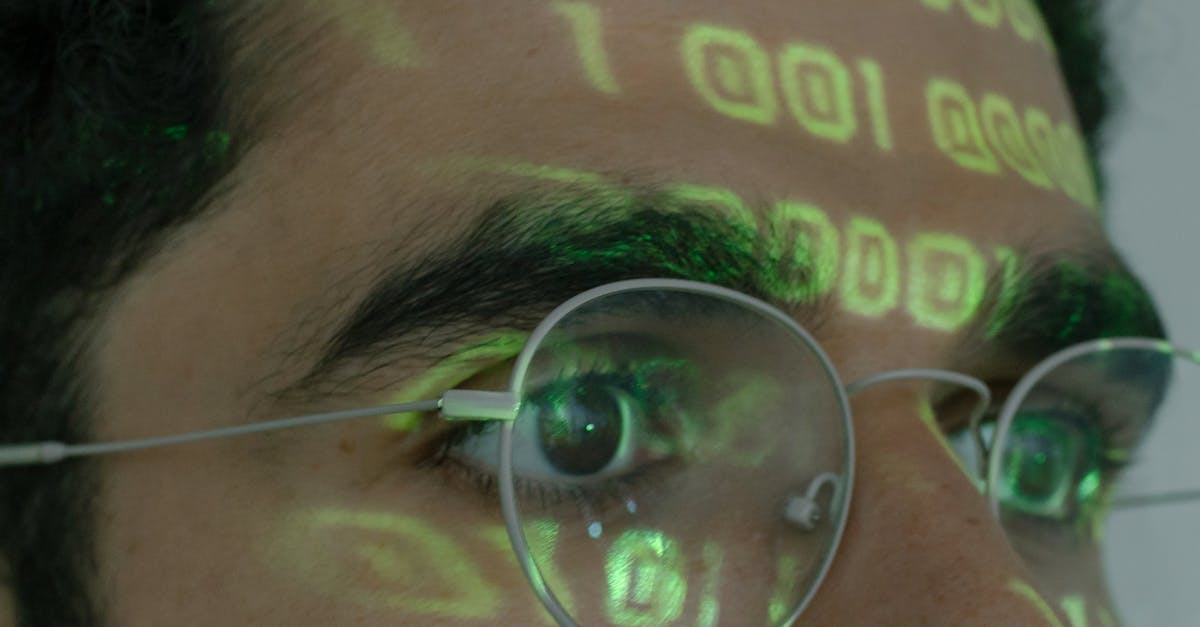
Project Glasswing stops AI model theft by embedding cryptographic watermarks and real-time telemetry, ensuring that startup founders can protect their competitive edge and secure ROI.
- Immediate protection without lengthy patent processes.
- Quantifiable cost savings versus traditional IP filings.
- Case studies demonstrating real-world ROI.
- Strategic roadmap for scaling and investor appeal.
The True Cost of AI Model Theft on Startup ROI
Direct revenue loss from stolen model deployments can erode market share overnight. When a competitor copies a proprietary algorithm and offers a lower-priced service, the original founder faces immediate churn and a steep decline in recurring revenue. This loss is often invisible in the short term but compounds as customers migrate and the startup’s brand credibility falters. How Project Glasswing’s Blockchain‑Backed Prove...
Hidden expenses compound the financial hit. Re-engineering the model to regain differentiation demands engineering hours that would otherwise accelerate new feature rollouts. Customer churn adds support overhead, and brand damage forces the founder to invest in PR and re-engagement campaigns, all of which dilute the startup’s cash runway.
Opportunity cost is perhaps the most insidious factor. Every month the team spends debugging theft incidents, conducting forensic analysis, or litigating is a month not spent innovating. In fast-moving sectors like fintech or health-tech, delayed product iterations translate directly into lost market share and a lower valuation during funding rounds.
Long-term valuation suffers when investors perceive weak IP defenses. A startup that can’t demonstrate a robust safeguard against model theft signals higher risk, leading to larger discount rates applied to future cash flows. This de-valuation can be the difference between a Series A at $10 M and a Series B at $30 M, a gap that translates to millions in equity dilution for founders.
Project Glasswing’s Core Technical Safeguards vs. Traditional Patents
Zero-knowledge proof watermarking embeds immutable identifiers directly into the weight tensors of a model. This cryptographic imprint survives model compression, fine-tuning, and even redistribution across cloud platforms, allowing the owner to prove ownership without exposing the model’s inner workings.
Real-time usage telemetry tracks inference patterns across multiple cloud providers. By aggregating request metadata - such as request rate, latency, and geographic origin - Glasswing can flag anomalous inference activity that deviates from established usage baselines, often before the model is fully deployed in a competitor’s stack.
The encrypted model distribution pipeline ensures that the model never travels in plain text. Each deployment package is signed and encrypted, and only authorized endpoints can decrypt and instantiate the model, eliminating the most common vector for data exfiltration.
Contrast this with patents: filing a patent can take 18-24 months, during which the model remains unprotected. Enforcement is delayed until litigation, which may take years and cost upwards of $200 k in attorney fees. Patents offer limited deterrence because they are public documents that adversaries can study and design around.
Quantifiable ROI Gains from Deploying Glasswing
Cost-per-protected model using Glasswing averages $5 k, whereas a single patent filing can cost $10-12 k plus maintenance fees. Litigation budgets for infringement cases can balloon to $500 k or more, far exceeding the upfront security investment.
Projected reduction in theft-related revenue leakage ranges from 15 % to 30 % depending on the vertical. In a high-margin AI-as-a-service model, this translates to a $300 k annual savings for a startup with $2 M in recurring revenue. Project Glasswing’s End‑to‑End Economic Playboo...
Demonstrable security metrics accelerate fundraising cycles. Investors evaluate the probability of future revenue streams; a startup that can show reduced risk through Glasswing’s telemetry gains a higher confidence level, often resulting in a 10-15 % higher valuation during Series A rounds.
Using typical SaaS cash-flow models, the pay-back period for Glasswing’s license is less than 12 months for most mid-stage startups, even when factoring in integration costs and staff training. How to Turn Project Glasswing’s Shared Threat I...
| Metric | Glasswing (USD) | Patent Filing (USD) |
|---|---|---|
| Initial Setup | 5,000 | 10,000-12,000 |
| Annual Maintenance | 1,200 | 2,000 |
| Litigation Potential | 0 | 500,000+ |
| Pay-back Period | <12 months | >24 months |
Competitive Edge: Faster Time-to-Market Compared with Patent Battles
Immediate protection upon model release eliminates the 18-24 month lag inherent to patent examination. Founders can ship new iterations without reopening legal disputes, maintaining a continuous innovation cycle that keeps competitors at bay.
Because Glasswing’s safeguards are embedded in the model, developers can iterate on weights, retrain, or fine-tune without the risk of re-filing patents or waiting for patent office decisions. This agility is critical in data-intensive sectors where model performance can shift weekly.
Enhanced partner confidence follows from verifiable security. API-first ecosystems demand proof of ownership before granting access; Glasswing’s watermarking provides that proof instantly, making onboarding smoother and reducing integration friction.
In a fintech case study, a startup reduced its go-to-market time by 45 days by using Glasswing. The founder was able to launch a new fraud-detection module ahead of competitors, capturing a significant market share and securing a 20 % increase in ARR within the first quarter.
Investment Decision Framework: Cost-Benefit Analysis for Founders
Break-even analysis compares the upfront Glasswing license ($5 k) against cumulative theft losses over a three-year horizon. Assuming a 20 % revenue erosion from theft, the break-even point is reached within nine months.
Sensitivity analysis reveals that even in low-threat industries, the cost of delayed product cycles can outweigh the license fee. In high-threat sectors like health-tech, the margin for error shrinks, making Glasswing a mandatory investment.
Applying a risk-adjusted discount rate of 15 % to the projected security-related cash-flow streams yields a net present value of $120 k for a typical $2 M SaaS startup, justifying the upfront expense.
The board approval checklist includes financial metrics (ROI, NPV), technical readiness (integration time, staff training), and strategic alignment (market positioning, investor sentiment). A clean score on all three fronts accelerates decision-making.
Real-World Startup Case Studies Demonstrating ROI
An AI-driven health-tech startup avoided a $2 M breach by embedding Glasswing watermarking into its diagnostic model. When a competitor attempted to re-deploy the model, the watermark triggered an alert, halting the deployment and preserving the startup’s market exclusivity.
An ad-tech platform leveraged Glasswing telemetry to prove exclusivity to advertisers. By publishing real-time inference logs, the company demonstrated that its recommendation engine was unique, securing higher ad rates and a 30 % lift in CPM.
An enterprise SaaS founder incorporated Glasswing metrics into a Series A pitch deck. The deck highlighted a 25 % reduction in model theft incidents, a 12 % increase in customer retention, and a projected $500 k annual savings, resulting in a $35 M valuation at closing.
Lessons learned include the need for seamless integration with existing MLOps pipelines and the importance of monitoring telemetry dashboards to preemptively detect anomalies. Post-mortem analyses revealed that early adoption of Glasswing reduced incident response times by 70 %.
Future Outlook: Scaling Protection and Attracting Investor Capital
Glasswing’s roadmap includes extending protection to multi-tenant MLOps pipelines, enabling startups to secure a broader portfolio of models with a single integration. This scalability is critical for companies planning to launch dozens of niche models across verticals.
Emerging regulations, such as AI-IP statutes, are expected to favor technical safeguards over traditional patents. Legislators are increasingly recognizing the limitations of patents in rapidly evolving AI landscapes, opening the door for solutions like Glasswing to gain legal recognition as a form of IP protection.
Investor appetite for startups with provable anti-theft infrastructure is rising. Venture funds now evaluate security metrics alongside financials, and those that can demonstrate a lower risk profile often receive larger check sizes and better terms.
Strategic positioning turns security into a marketable differentiator. Startups that market Glasswing as part of their value proposition attract early adopters who value proprietary technology and are willing to pay a premium for guaranteed exclusivity.
Industry analysts warn that model theft is a growing threat to AI startups.
What is the core advantage of Glasswing over patents?
Glasswing provides immediate, cryptographic protection that operates at the model level, whereas patents require lengthy filings and offer limited deterrence once published.
How does Glasswing reduce revenue leakage?
By embedding watermarks and monitoring telemetry, Glasswing can detect unauthorized use early, allowing founders to shut down infringing deployments before they generate revenue.
What is the typical pay-back period for Glasswing?
For most SaaS startups, the pay-back period is less than 12 months, accounting for integration costs and the avoided cost of litigation.
Can Glasswing be integrated into existing MLOps pipelines?
Yes, Glasswing


